McIntosh County · Oklahoma

Emergency Remote Man Camp & Sleeper Trailer Rentals In Hitchita.

Sleeper trailer rentals and man camp accommodation are available in Hitchita for visiting workers staying through a McIntosh County job. When a rural house restoration or related repair effort continues for several days, organize lodging around the crew's access to the property. Supporting restroom, shower and laundry facilities can accompany the camp, with emergency deployment coordination available 24/7.

Serving Hitchita, Oklahoma · 24/7 emergency deployment and ongoing support. Confirm your unit mix and delivery schedule with our team.
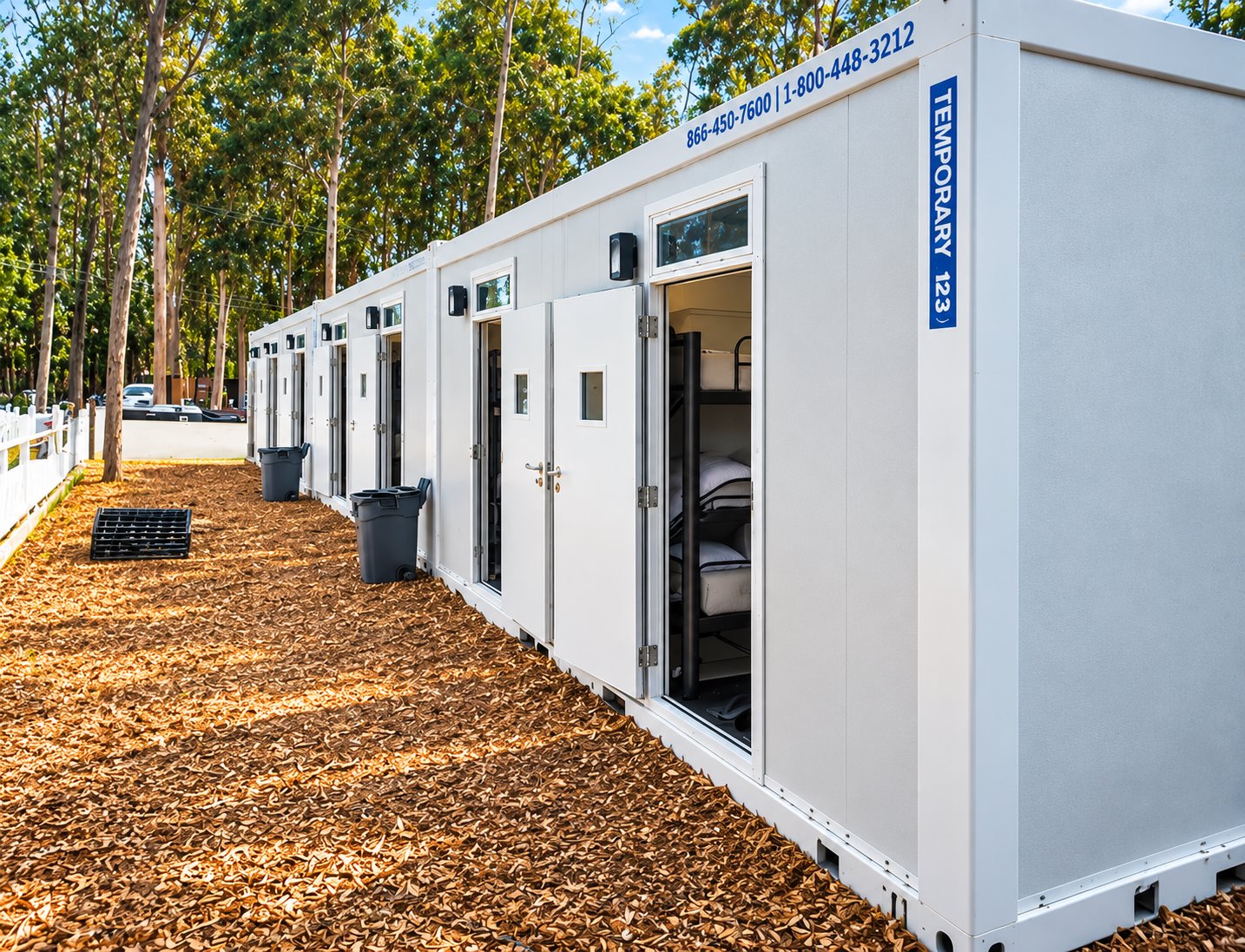
Sleeping & accommodation

Sleeper options for your Hitchita project.

Compare the published sleeper and accommodation models, then open a model page for its full details.
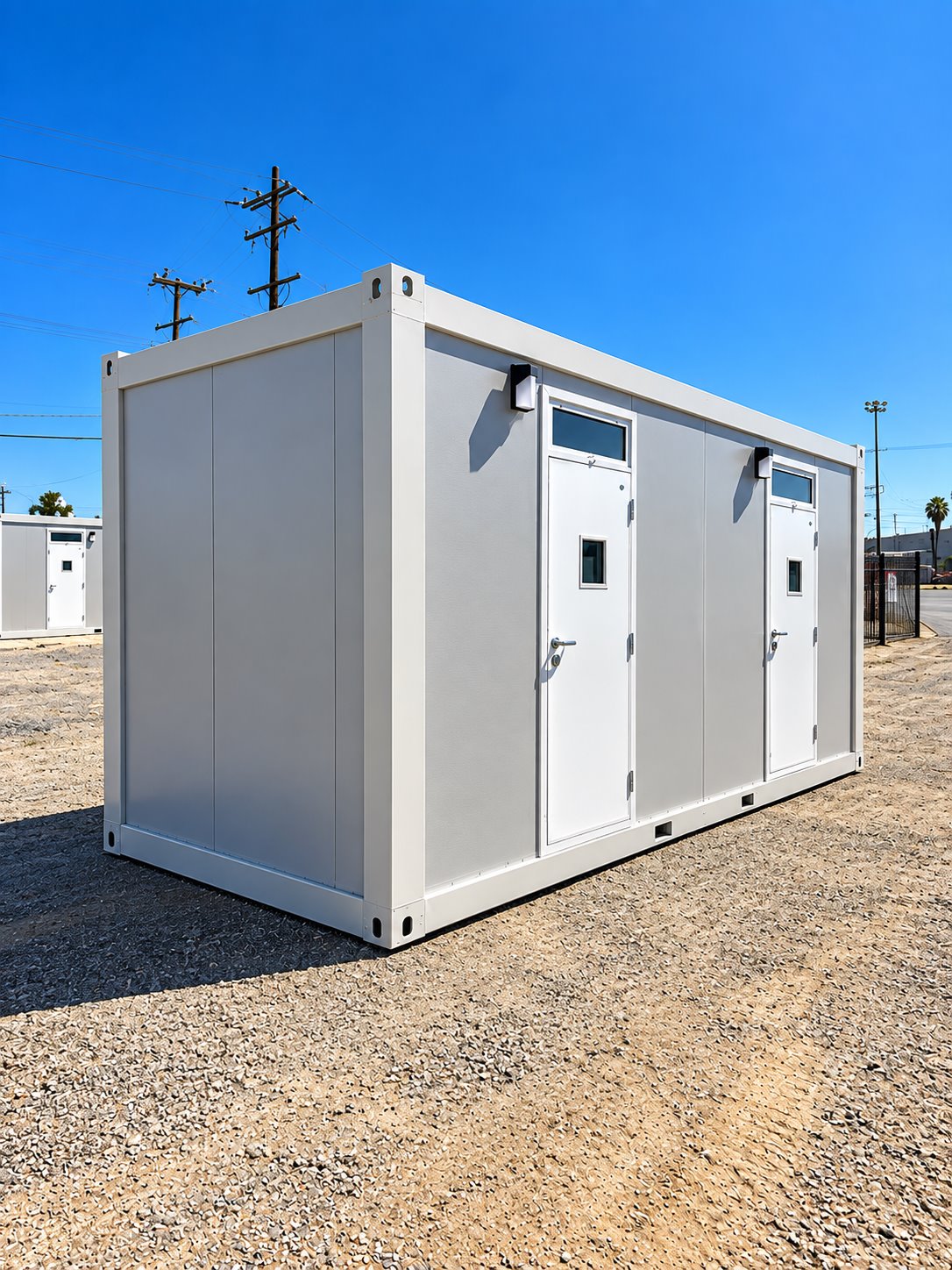
Exterior view of two-stall sleeper trailer
Sleeper accommodation

2-Stall Sleeper Trailer

Plan separate sleeping areas for a small crew or assigned staff. The 2-stall sleeper option can form part of a temporary camp without committing to a large shared sleeping hall.

View model details ↗
Exterior side view of 20ft contractor accommodation unit
Sleeper accommodation

20ft Contractor Sleeper Trailer

The 20ft Contractor Sleeper Trailer is described with individual sleeping areas, heating, air conditioning and storage for personal belongings or work equipment.

View model details ↗
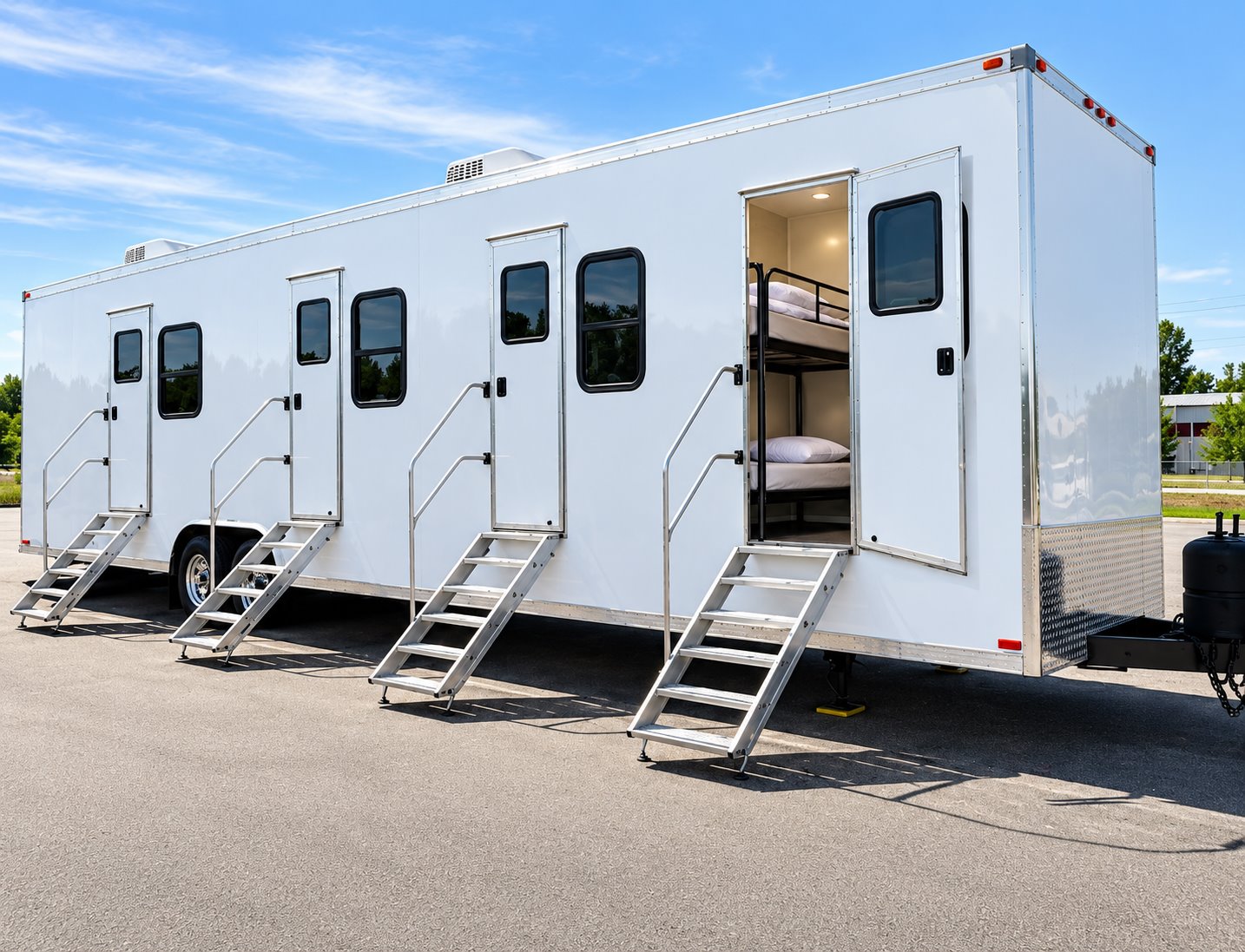
Exterior of 20ft VIP accommodation trailer
Sleeper accommodation

20ft VIP Sleeper Trailer

The 20ft VIP Sleeper Trailer is listed with a private sleeping area, bathroom, kitchenette and space for work or relaxation. Heating and air conditioning support the accommodation.

View model details ↗
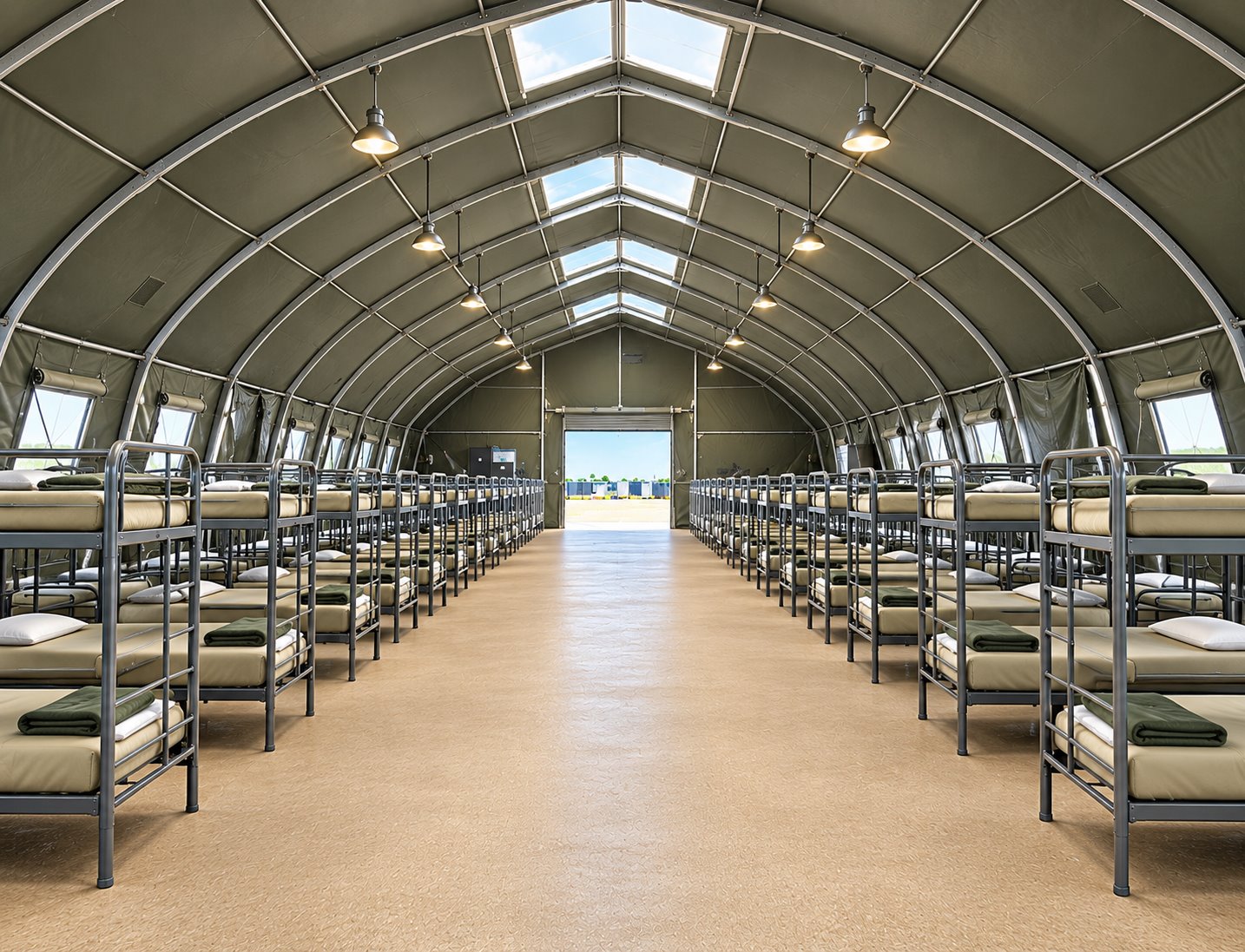
Shared bunkhouse interior with rows of sleeping bunks
Sleeper accommodation

Temporary Sleeping Facilities

Create a shared sleeping area for a larger temporary workforce. Bunkhouse-style sleeping facilities help organize crew accommodation alongside a separate kitchen, dining area, and hygiene facilities.

View model details ↗
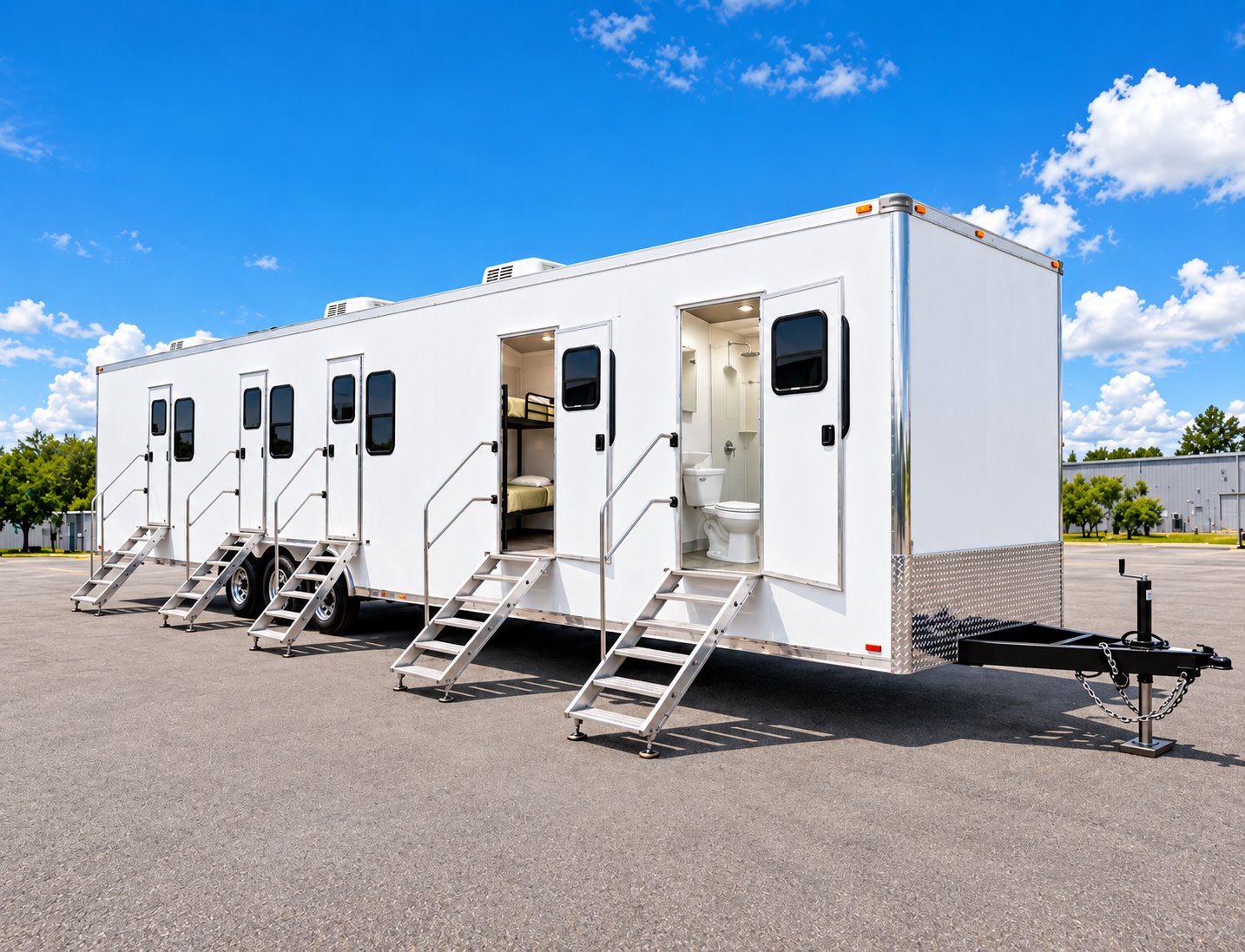
Combination office, sleeper, shower, and restroom trailer
Sleeper accommodation

Office, Sleeper, Shower & Restroom Trailer

Bring working, resting, and personal-care functions into one crew-support location. This combination trailer is an option for projects that need more than a stand-alone office or sleeping unit.

View model details ↗
Configuration at a glance

Compare sleeper specifications.

Published specifications are shown for each model. Confirm the assigned unit and site requirements when requesting availability.

Sleeper and accommodation configurations for Hitchita, Oklahoma
ModelPublished specifications
2-Stall Sleeper Trailer ↗
  • Model2-stall sleeper configuration
  • Sleeping arrangementConfirm room layout and beds for the selected unit
  • Project roleSmaller crew accommodation within a temporary site
  • PlacementDelivery method and final positioning coordinated for the site
20ft Contractor Sleeper Trailer ↗
  • Model class20ft contractor accommodation
  • Sleeping arrangementBunk-room configurations; confirm the selected layout
  • Project roleTemporary crew accommodation
  • Site coordinationDelivery access, placement, electrical supply, and camp facilities
20ft VIP Sleeper Trailer ↗
  • Model class20ft VIP accommodation
  • Planning focusRoom privacy, sleeping arrangement, and furnishings
  • Project roleTemporary accommodation near the assignment
  • Selected layoutRoom and bed arrangement confirmed with the quote
Temporary Sleeping Facilities ↗
  • Facility typeShared bunkhouse-style sleeping area
  • Interior arrangementRows of bunks with a central aisle
  • Layout planningBed arrangement, circulation, and personal storage
  • Camp coordinationDining, showers, restrooms, laundry, and site utilities
Office, Sleeper, Shower & Restroom Trailer ↗
  • Equipment typeCombination crew-support trailer
  • Main functionsOffice, sleeping, shower, and restroom
  • Layout reviewWork areas, beds, shared spaces, and storage
  • Site connectionsConfirm electrical, water, and wastewater arrangements

Configuration and availability depend on the selected unit and project requirements.

Hitchita’s volunteer firefighters responded to a rural house fire

An East Central Electric Cooperative profile published in April 2025 followed Hitchita volunteer firefighters answering an early-morning call to a house fire on County Line Road. By the time the crew received the page, several minutes had passed; volunteers got to the station, loaded trucks, and focused first on making sure people were out. A portable handwashing station station could serve an authorized recovery site after such work.

The story describes a rural response by Hitchita volunteers, not a fire in the town center. It also makes clear how much local emergency coverage depends on people leaving home and work to staff the call.

A 1907 railway settlement became the present Hitchita

Hitchita was first located about one and a half miles east of today’s townsite. In 1907 a settlement called Dunbar began along the Missouri, Oklahoma and Gulf Railway, whose tracks had been built through the area in 1904–05. The post office moved there and took the Hitchita name. A future heritage gathering could use a portable restroom trailer for visitors at an approved meeting point.

OHS explains that businesses moved from the earlier site to the new one, making Hitchita’s shift a relocation story rather than a simple expansion in place. Dunbar was named for poet Paul Laurence Dunbar, a detail that adds a separate cultural layer to the railway history.

Facility options

Support your Hitchita crew.

Plan sleeping accommodation together with the site services that make a longer assignment workable.
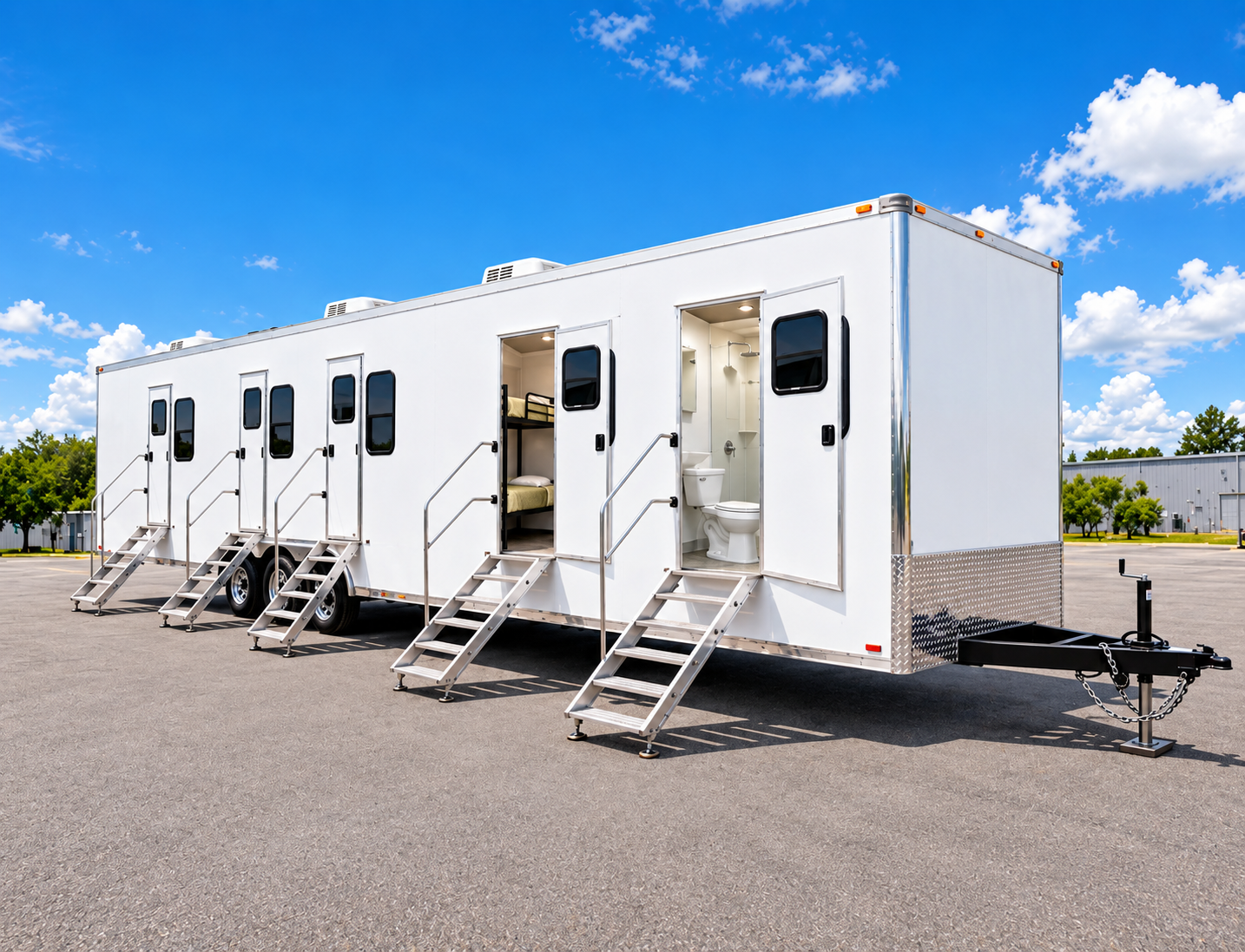
Temporary workforce facility with sleeper rooms, restroom, and shower access

Man Camp Facilities

Plan temporary workforce accommodation around your site, crew size, project timeline, and daily needs. EZE Trailer Rentals coordinates sleeper units with supporting shower, restroom, and laundry facilities as one site plan.

Explore facility ↗
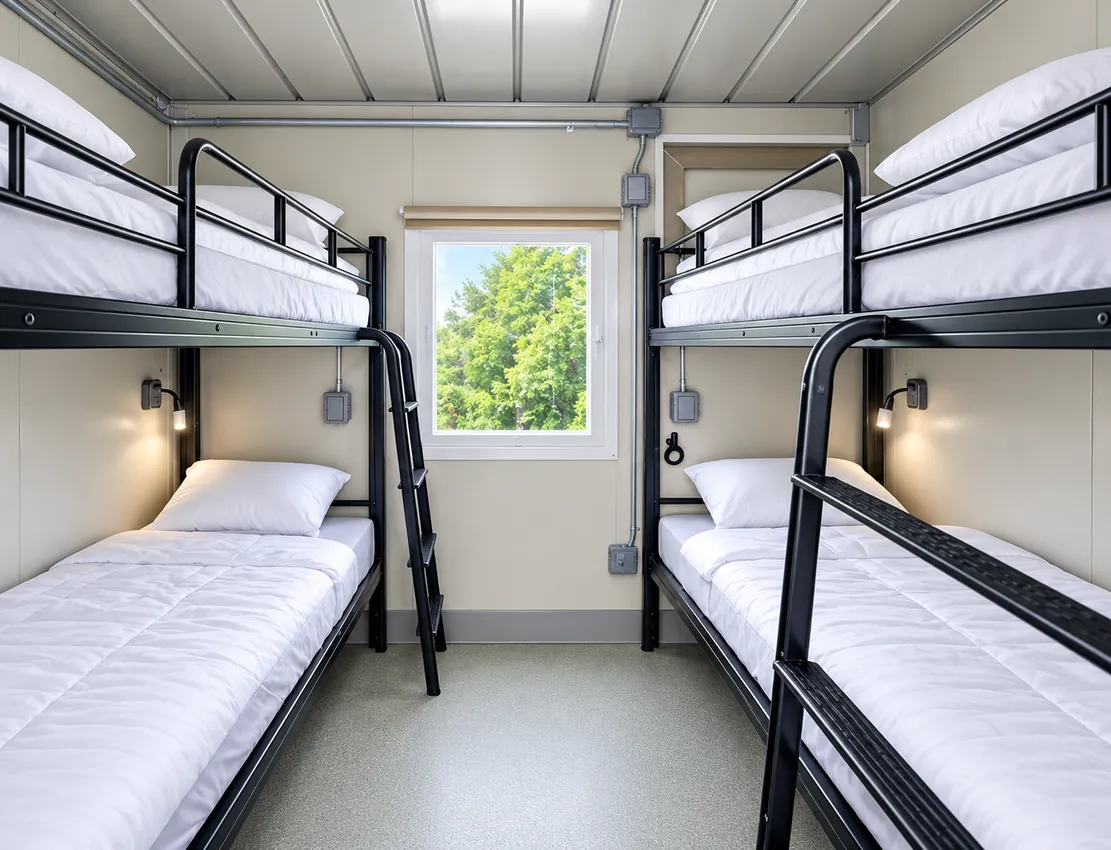
Bunk-style sleeping accommodation inside a temporary sleeper unit

Sleeper Trailers & Units

Explore temporary sleeping accommodation for crews working away from permanent housing. Unit layouts and capacity vary, so planning starts with your crew count, privacy needs, dates, and site conditions.

Explore facility ↗
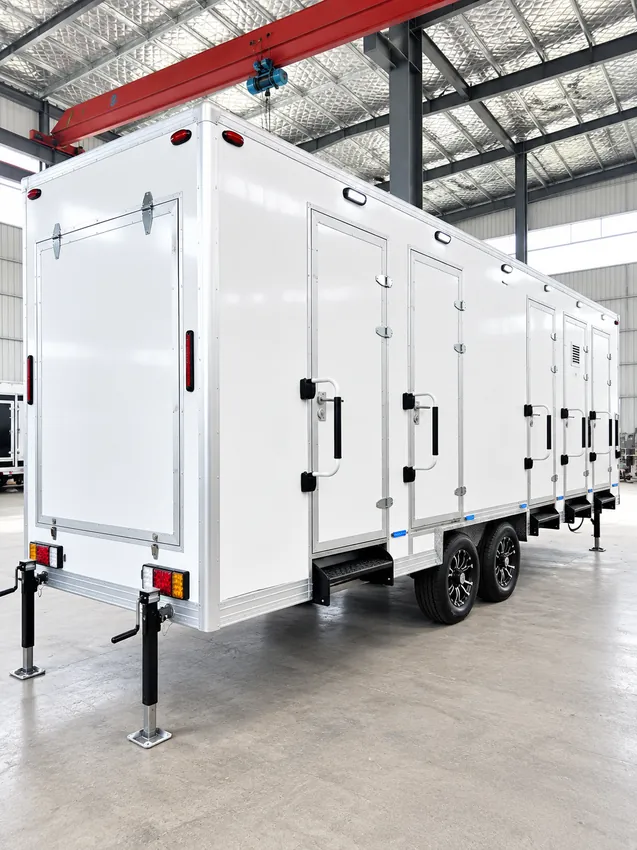
Temporary multi-stall shower trailer at a project site

Shower Trailers

Add temporary shower facilities to a workforce camp or remote project site. We review peak use, layout, water and wastewater connections, delivery access, and the project schedule before confirming a configuration.

Explore facility ↗
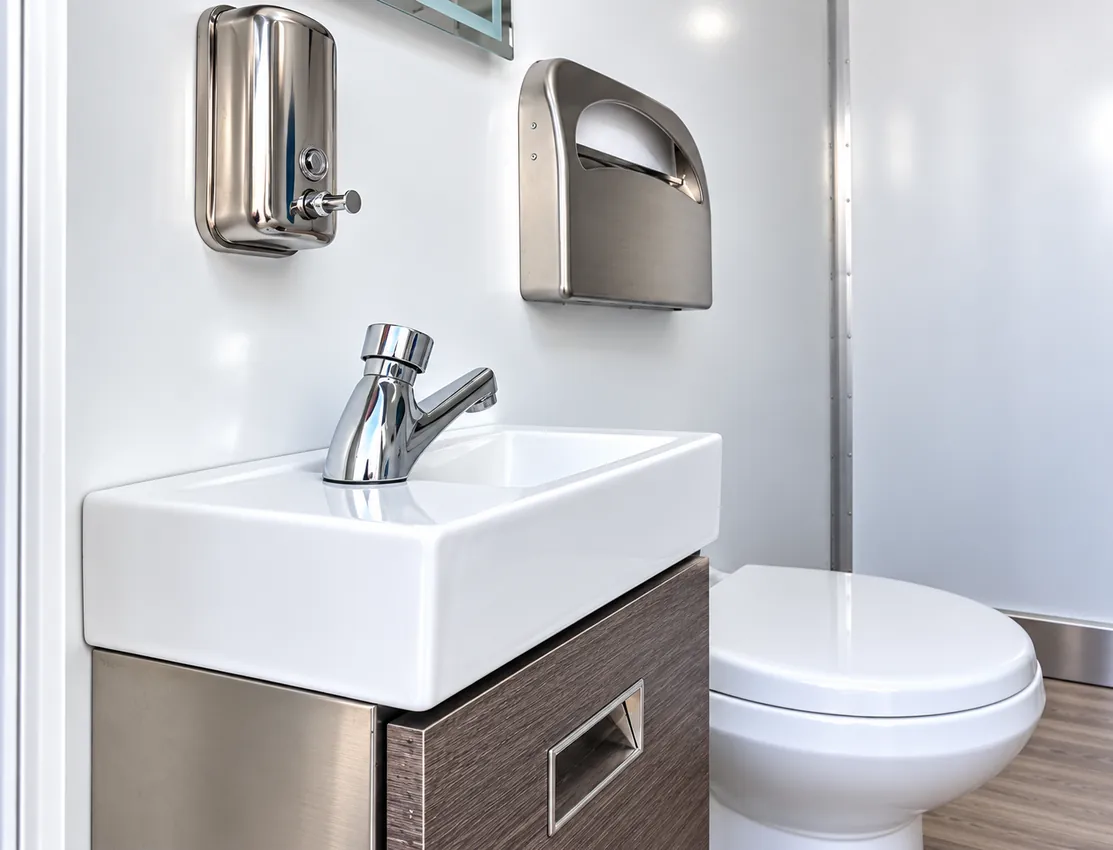
Sink and toilet inside a temporary restroom facility

Restroom & Bathroom Trailers

Plan temporary restroom and bathroom facilities for workforce housing, construction, and remote operations. Fixture mix, accessibility needs, site servicing, utilities, and availability are confirmed for each project.

Explore facility ↗
Temporary shower and restroom combination facility

Restroom & Shower Combination

Temporary combined restroom and shower facilities for projects that need both functions at one site.

Explore facility ↗
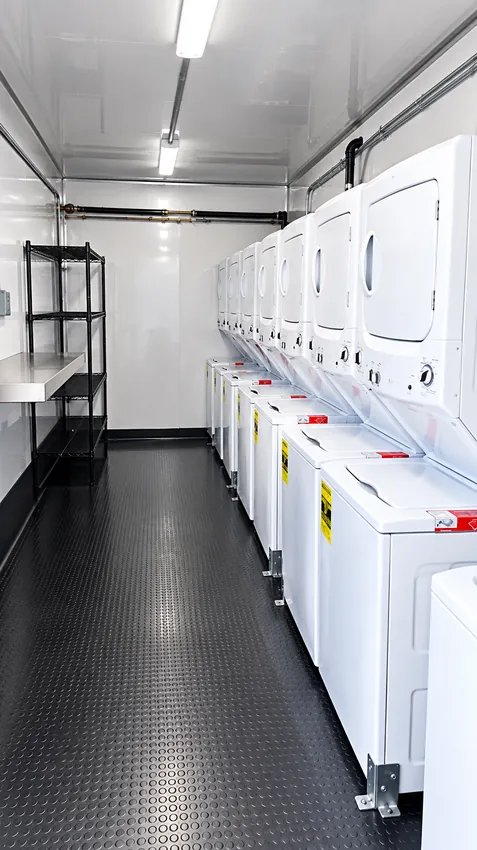
Commercial washer and dryer units inside a temporary laundry facility

Laundry Trailers

Support longer assignments with temporary laundry facilities planned around crew size, expected loads, utilities, servicing, and available space at the site.

Explore facility ↗

The town’s name honors a Muskogean community

The Oklahoma Historical Society says Hitchita’s name honors a band of Muskogean Indians absorbed into the Creek tribe. That account roots the community’s identity in Indigenous history, not in the railroad official or businessperson sometimes assumed to be behind a town name. A future cultural program could use a temporary shower-restroom trailer for visitors and participants at an authorized outdoor venue.

The OHS entry also locates Hitchita between Checotah and Henryetta and one mile north of U.S. 266. Those geographic details help place the name in its local context without reducing the town’s history to a single origin story.

A post office, grocery, doctor, and cotton gin served old Hitchita

By 1905 the earlier Hitchita site had a grocery store and a post office run by J. C. Morton. Dr. Hamilton worked across the road, while P. D. Berryhill operated a cotton gin. These specific services make the first settlement easier to imagine than a bare founding date. A future archival program could use a portable restroom trailer at a temporary community venue.

The businesses were associated with the old site east of present Hitchita. The post office later moved to Dunbar, after which business owners also shifted toward the current townsite.

Plan the site

Start with your workforce and location.

Share the crew size, project term, rooming preferences, and service needs. We’ll review practical placement, access, utilities, and delivery considerations for the address.

Discuss your site ↗

The Lackey family store stayed open under its name for decades

J. R. Lackey and his son established a general store in 1914, and it continued under the Lackey name until 1943. OHS ties the store to a family whose descendants remain in the area, giving the small town’s commercial history a clear personal thread. A future reunion or local-history day could use a portable restroom trailer at an approved gathering site.

The store’s longevity followed the earlier move from the old Hitchita site to the railway settlement. The source does not identify a surviving store building, so this is a business history rather than a preservation claim.

A family cemetery began after a child’s death in 1908

The Hitchita Lackey Cemetery, one mile east of town, was established by J. R. Lackey in 1908 after the death of a grandson. That origin connects a local burial ground to one of the families named in the town’s early history. A portable handwashing station station might serve an authorized cemetery volunteer day, with access and placement arranged by the cemetery’s caretakers.

OHS provides the cemetery’s location and founding context but does not give access instructions or say who maintains it today. A respectful account should not turn a family burial site into an assumed public attraction.

Hitchita’s school enrolled nearly 500 children in the 1930s

During the 1930s, Hitchita’s school enrolled almost 500 students, far more than the town’s later census population. The school served an area larger than the incorporated place, a useful distinction when describing how rural institutions worked. A future alumni event might plan a portable restroom trailer at the approved venue for visitors traveling from the wider school district.

OHS’s later account of major local buildings lists an elementary school, churches, post office, rural fire department, and senior center. These institutional details explain why a tiny present-day population does not capture the historical reach of community life.

A cotton gin and three churches anchored the 1920s and 1930s

In the 1920s and 1930s, Hitchita had general stores, a lumberyard, drug store, bank, cotton gin, and three churches. The mix reveals a rural center with commercial, agricultural, and religious functions. A future community celebration could use a temporary shower-restroom trailer for an outdoor program that brings several generations together.

Those businesses followed the railway-era move to the current site, while population declined from 264 in 1920 to 120 in 1960. OHS presents both the service landscape and the demographic shift, rather than suggesting the old commercial district persists unchanged.

Project planning questions

Hitchita workforce facility FAQs.

Can you help plan a man camp near Hitchita?

Share the project address, workforce count, schedule, and the services your crew needs. EZE Trailer Rentals will review sleeper and supporting facility options for the location.

Which supporting facilities can be planned?

The focus is sleeper accommodation with supporting shower, restroom or bathroom, and laundry facilities. The mix depends on your workforce and site requirements.

Can the facilities be coordinated as one site plan?

Yes. Share how the units need to work together, along with placement, utility, delivery access, and servicing requirements. Final configuration and availability are confirmed for the project.

What information helps plan a project in McIntosh County?

A project address, crew size, rooming needs, dates, access and placement details, available utilities, and the supporting services you want to include.

The 1903 wagon train brought settlers to the area

In 1903 J. R. Lackey brought an eight-wagon “train” to the Hitchita area. OHS notes that he had earlier visited and purchased eighty acres from a freedman. The story adds a specific migration detail to the broader regional settlement history. A future local-history program could use a portable restroom trailer while interpreters discuss the documented family account.

The source names several early families and says many descendants still live in the area. It does not say that this single wagon party founded the town, which had an earlier community and later moved toward the railroad.

Hitchita’s census count fell to 62 by 2020

The 1920 census recorded 264 people in Hitchita; the April 2020 census counted 62. OHS places that shift alongside changes in local institutions, including the loss of the town’s earlier commercial range. A future gathering can choose a portable restroom trailer based on actual attendance and venue conditions, rather than treating past population as a proxy for event size.

Census figures describe residents, not visitors or the wider service area. The school’s large 1930s enrollment also shows why historical institutional reach should not be inferred from the present town count.

EZE Trailer Rentals

Plan your Hitchita site.

Tell us about the crew, timeline, and facilities you need for your Oklahoma project.